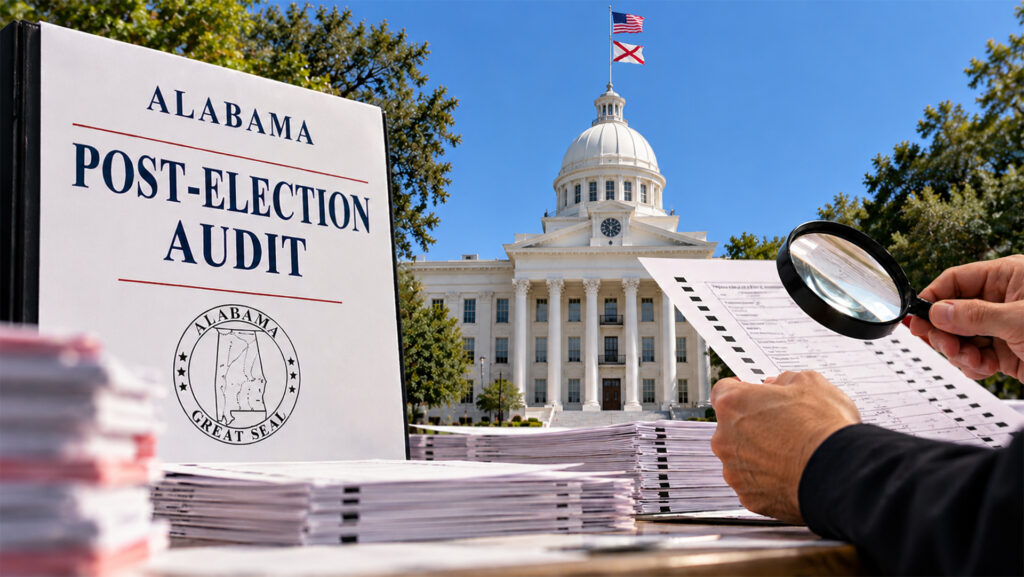
Alabama’s new election-audit law requires every county to examine election results, but leaves important decisions about the scope and independence of those audits to local officials.
Alabama has enacted a new post-election audit law that will require counties to examine the accuracy of reported election results following statewide and countywide general elections.
The Alabama Post-Election Audit Act, enacted in April 2026 through House Bill 95, establishes a mandatory audit process in all 67 counties. It also gives county probate judges considerable discretion over how extensively election results will be examined.
For Alabama’s citizen-led election-integrity movement, the legislation represents a significant development. After years of advocacy for independent verification of electronic vote totals, the state now has a statutory requirement for post-election audits.
But the law raises an important question: Will Alabama’s counties use the new audit process to independently verify the accuracy of electronic tabulators, or will they limit their examinations to the minimum required by law?
The answer will depend largely on decisions made at the county level.
Alabama’s new audit requirement follows earlier pilot efforts. In 2022, the Secretary of State’s office conducted post-election audits in Dallas, Houston, and Marshall counties, demonstrating how paper ballots could be examined and compared with electronically reported results. Those limited county audits preceded the statewide requirements established by HB95 in 2026.
What the New Law Requires
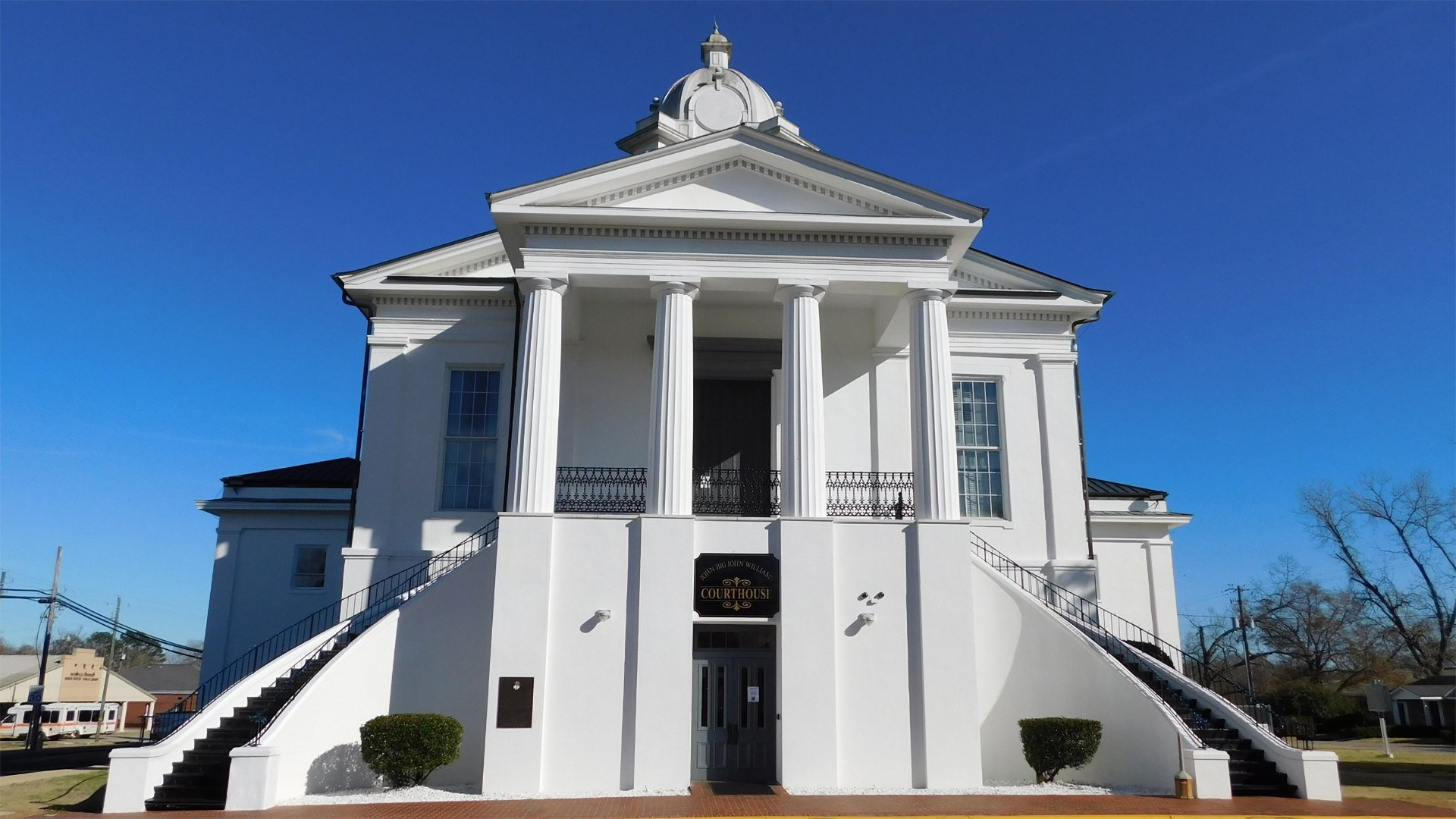
Under HB95, the probate judge in each Alabama county must order a post-election audit following countywide and statewide general elections.
At a minimum, the county canvassing board must select one precinct and one statewide or countywide race for examination. The audit must cover all ballots in that selected precinct for the selected race, excluding absentee and provisional ballots from the mandatory selection.
The law expressly permits probate judges to order audits of additional precincts and races.
This creates two substantially different possibilities.
One county might audit a single precinct and a single contest, satisfying the minimum statutory requirement.
Another might authorize a broader examination involving multiple precincts and races, potentially providing a more comprehensive assessment of the accuracy of its reported results.
Both approaches can satisfy the law, but they do not necessarily provide the same level of independent verification.
Hand Counting Is Permitted, but Not Required
One of the most consequential provisions of HB95 concerns the method used to conduct an audit.
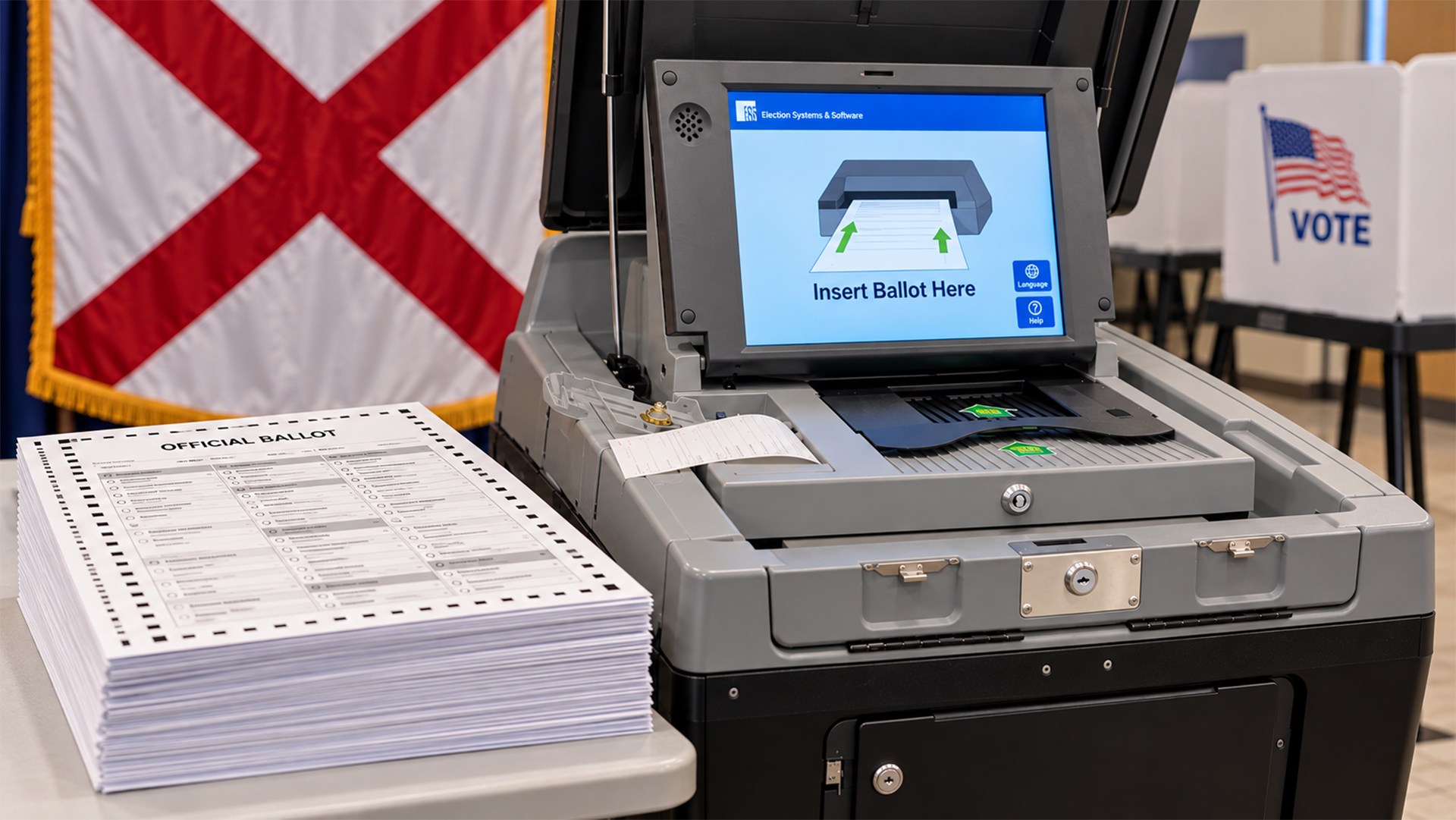
The law permits a probate judge to conduct the audit either through a manual tally or through ballot counters, provided that at least 30 selected ballots are individually examined by hand and compared with the ballot-counter results for those ballots.
In other words, Alabama’s new audit law does not require every county to independently hand-count all ballots included in its audit.
A county may choose to conduct a manual tally of the selected ballots. Alternatively, it may use ballot-counting equipment while manually examining the required minimum sample.
That distinction matters because the primary purpose of an independent audit is to determine whether the results originally reported by electronic voting equipment accurately reflect the votes recorded on paper ballots.
When the same equipment or counting method is used to reproduce an earlier result, the process may provide less independent assurance than a separate manual tally.
A hand count, conducted under appropriate procedures and compared with the original electronic totals, offers a direct method of evaluating tabulation accuracy.
The law gives probate judges the authority to choose that method. Whether they exercise it will be an important measure of how the new audit process is implemented.
The Final Law Does Not Require Random Selection
Another significant feature of the enacted legislation is the absence of a requirement that audit precincts be selected randomly.
Random selection can help reduce the possibility that an audit concentrates on precincts chosen because their results are expected to be uncomplicated or favorable.
The final version of HB95 instead assigns the selection of precincts and races to each county canvassing board without expressly requiring a random-selection procedure.
That does not prevent a county from voluntarily using a transparent random-selection method.
However, it means that the degree of unpredictability and transparency in selecting audit targets may differ among counties.
For citizens evaluating the audit process, the method of selecting precincts may be nearly as important as the number of ballots examined.
What Happens When an Audit Finds a Discrepancy?
HB95 requires county audit reports to describe any problems or discrepancies encountered, identify their likely causes, and recommend corrective or remedial action.
The reports must be submitted to the Secretary of State, who is required to publish the results on the state’s official website and report the findings to the Governor and Legislature.
These requirements create a public record of the audit findings.
However, the law does not establish a specific numerical discrepancy threshold that automatically requires an expanded audit or additional hand counting.
For example, it does not specify that a particular difference between the original electronic totals and the audit results must trigger examination of additional precincts.
Nor does the statute establish an automatic procedure for changing certified election results based solely on an audit discrepancy.
Consequently, the reporting and corrective-action recommendations may be important, but the practical response to identified discrepancies will require close attention.
An audit that identifies a counting problem is valuable. A process that also establishes how significant discrepancies will be investigated and addressed can provide stronger accountability.
The Cost of Expanded Audits
One possible concern about more extensive hand-count audits is the expense involved.
HB95 addresses county audit costs directly.
The legislation provides that all expenses incurred by a county as a result of the audit shall be reimbursed in full by the State Comptroller.
The law does not establish an explicit dollar ceiling on that reimbursement.
This provision is important because it reduces the financial burden that might otherwise discourage counties from conducting more extensive examinations.
It does not eliminate practical considerations such as staffing, scheduling, ballot custody, and administrative coordination.
Nevertheless, probate judges considering additional precincts or manual tallies have a statutory reimbursement provision available to support the audit process.
Public Observation and Transparency
The new law includes provisions intended to make the audit process observable.
Probate judges must provide public notice of the audit’s date, time, and location through a newspaper of general circulation or the county’s official website.
Poll watchers are authorized to attend and observe under the same general procedures applicable to elections. Accredited members of the news media are also permitted to observe.
The statute establishes requirements for preserving ballot containers, handling election materials, and maintaining a separate Record of Audit.
Following the examination, the ballots must be returned to their original containers and resealed.
These procedures create opportunities for public oversight and documentation.
Their effectiveness will depend on whether counties provide timely notices, maintain clear records, and conduct the examinations in a manner that allows observers to understand the process.
November 13: Counties Make Their First Major Decisions
The November 3, 2026 general election will provide the first major opportunity to evaluate how Alabama’s new audit law operates statewide.
Under HB95, county canvassing boards must select their audit precincts and races at noon on the second Friday following the election.
For the November 3 election, that date is Friday, November 13, 2026.
Probate judges must also select the date, time, and location of their audits and make the necessary personnel arrangements.
The audits themselves will occur later, subject to the statute’s timing requirements concerning the election-contest filing period and completion of the audit.
November 13 will therefore be an important initial point of comparison among Alabama’s 67 counties.
Which precincts will be selected? Will counties choose their precincts randomly? How many races will be examined? Will probate judges authorize additional precincts beyond the statutory minimum?
The answers will help establish how broadly counties intend to use the authority granted by the new law.
The actual audit methods and results will require further examination once the audits are conducted.
A Statewide Law, but County-Level Responsibility
The Alabama Post-Election Audit Act establishes a common legal framework, but the scope of individual county audits may vary considerably.
One county may conduct the minimum examination using ballot counters and the required manual sample.
Another may choose to hand-count ballots from several precincts and compare those results directly with the original electronic totals.
Both would operate under the same statute, yet the amount of independent evidence generated could differ substantially.
That places county probate judges in a particularly important position.
They have the opportunity to use the authority provided by HB95 to demonstrate the accuracy of reported election results through meaningful, documented examinations of voter-marked paper ballots.
For citizens concerned about election integrity, this also creates an opportunity to observe county decisions, review audit reports, and evaluate whether the procedures provide independent assurance of accurate vote counting.
Will Alabama Go Beyond the Minimum?
The passage of HB95 represents a meaningful step toward making post-election verification a routine part of Alabama’s election administration.
But the existence of an audit requirement does not, by itself, determine the quality or independence of the verification performed.
The scope of the audit, the method used to count ballots, the selection of precincts, the documentation of discrepancies, and the transparency of the process will all influence the value of the results.
The law provides county officials with options to conduct more extensive audits than the statutory minimum.
The central question now is whether Alabama’s probate judges will use those options to provide meaningful independent verification of the vote.
StopVotingFraudAL.com intends to examine county audit selections and subsequent results following the November 2026 general election, with particular attention to the use of hand counting, the extent of the examinations, and the transparency of reported findings.
Alabama has taken the step of requiring post-election audits. The next test will be how thoroughly those audits are carried out.