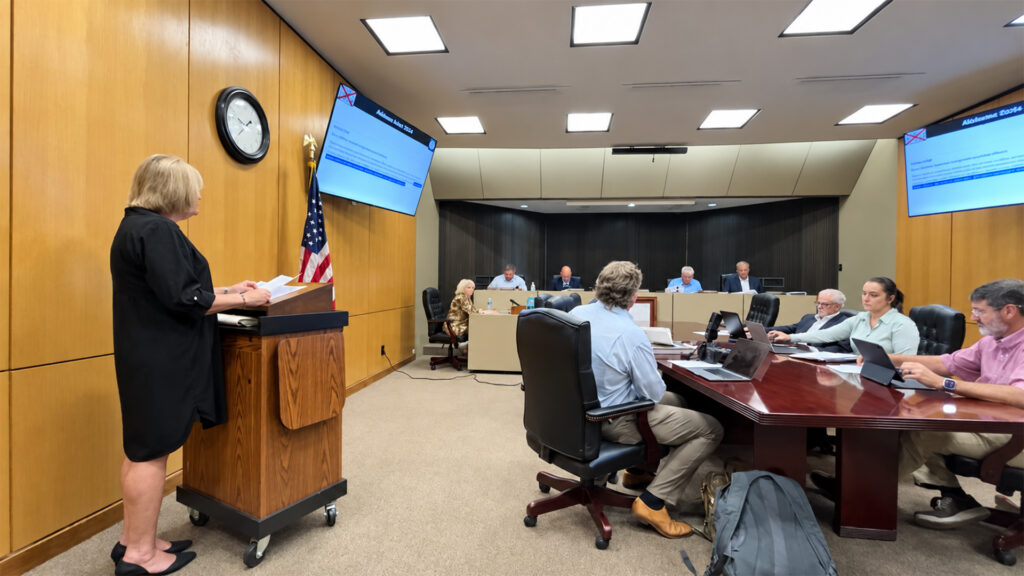
Walker County, Alabama — September 8, 2026 — A Walker County citizen presented the County Commission with findings from a local election-integrity investigation Tuesday, detailing voter-roll problems involving deceased registrants, disqualified voters, residency issues and noncitizen registrations while calling on commissioners to consider steps toward restoring local control of the county’s voter rolls.
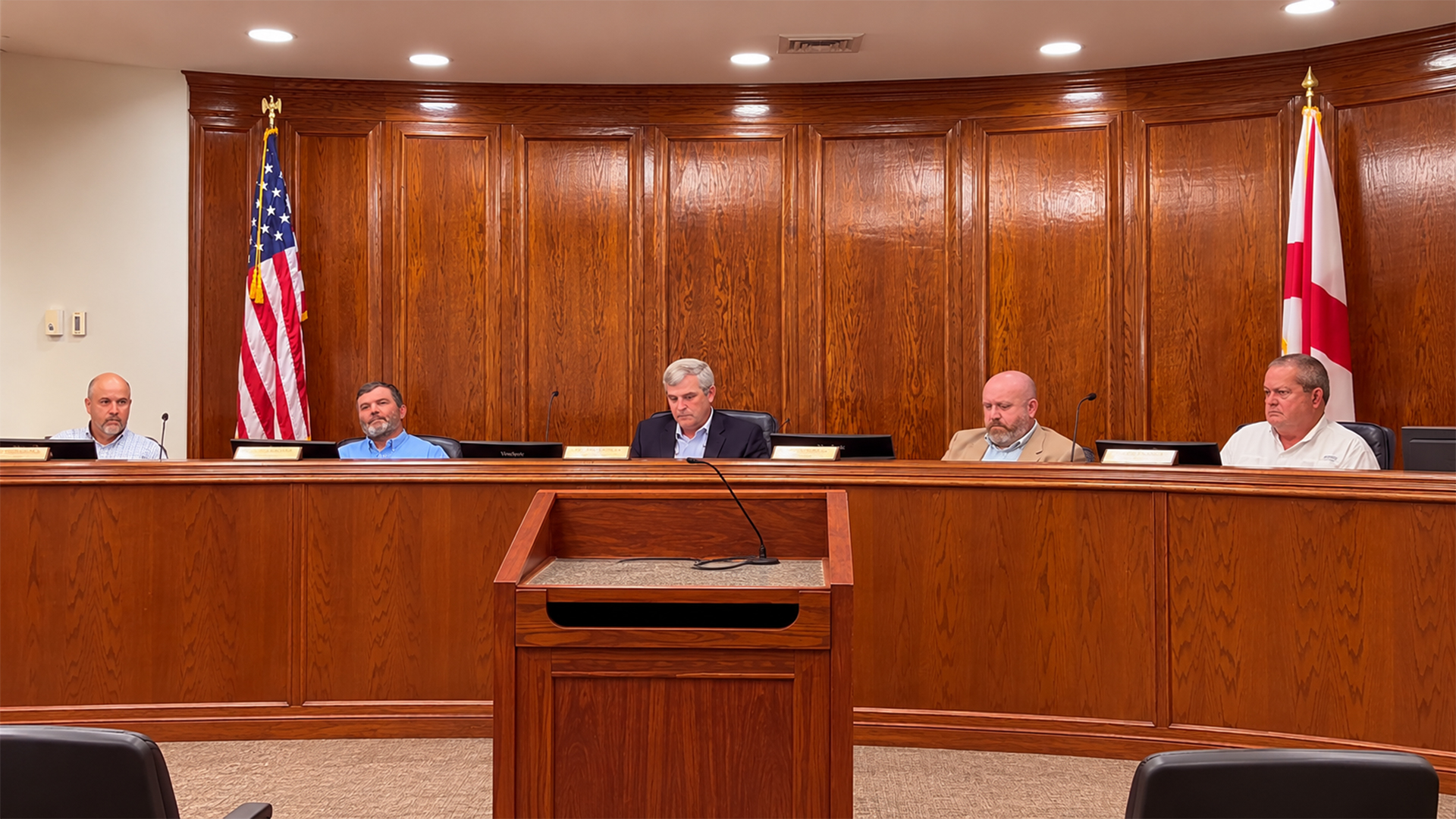
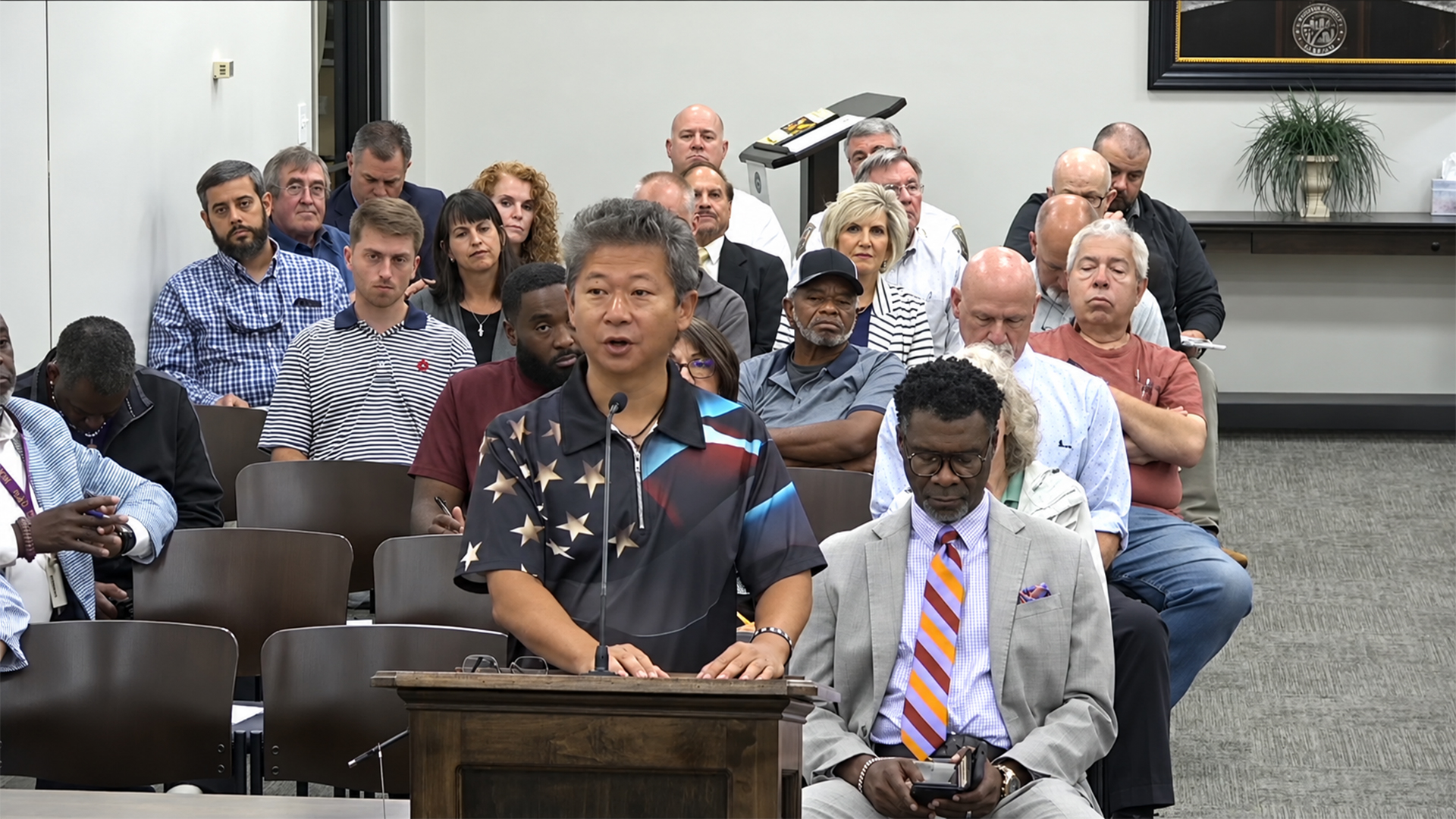
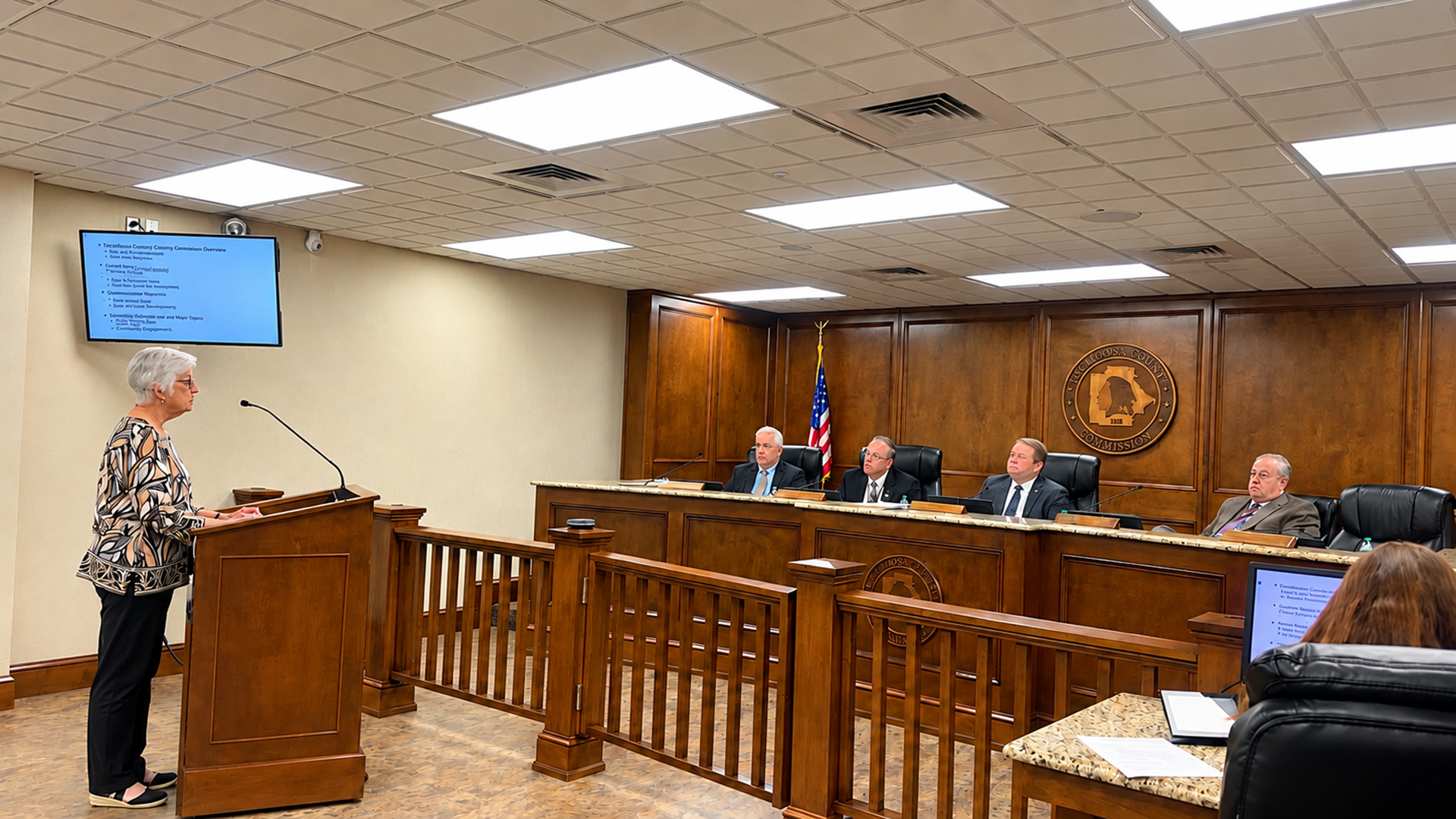
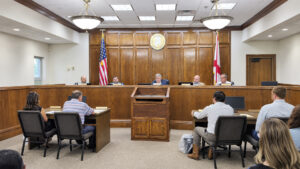
Iva Hendon, a Walker County voter representing a grassroots group of Alabama citizens working on election integrity, addressed Chairman Steve Miller and the Walker County Commission during the commission’s September 8 meeting.
“We are one of several counties across the state investigating our voting system, with special attention to our voter rolls,” Hendon told commissioners. She said the county teams have been working both to identify problems and to examine how Alabama’s centralized voter-registration system affects the ability of local officials to maintain their own rolls.
The presentation was part of a broader citizen-led election-integrity effort underway in Alabama and across the country under the guidance of Dr. Douglas G. Frank. Frank’s work now extends to citizen teams in 48 states, with the effort centered on investigating voter rolls, documenting irregularities and bringing evidence to local officials.
In Alabama, that national effort is being carried out county by county, with citizen teams examining local voter records and assembling evidence for presentation to the officials responsible for administering and funding elections.
Full Walker County Commission Presentation
Investigation Finds Deceased Registrants Remaining on Walker County Rolls
Hendon presented commissioners with several categories uncovered during the Walker County team’s investigation, including deceased registrants who remained on the voter rolls years after death, individuals with disqualifying convictions, individuals declared legally mentally incompetent, and voters whose registered addresses did not correspond to their primary residences.
Among the examples presented were two deceased Walker County registrants whose identifying information was partially withheld.
One voter, identified publicly only by the last four digits of the voter identification number, died in 2009 but was still listed as an active voter in 2022—13 years after death. The record showed that the registrant was subsequently changed to inactive status but remained on the 2025 voter roll, 16 years after death.
A second registrant died in 2010 but remained active on the rolls 12 years later and was still present as inactive in 2025, according to the investigation.
Hendon told commissioners that these were only two examples from a larger group documented by the Walker County team.
Voting Records Examined After Legal Disqualifications
The investigation also cross-referenced voter records with other public records to identify individuals whose eligibility had been affected by criminal convictions or court determinations of mental incompetency.
Hendon presented two cases involving individuals convicted of first-degree sexual abuse. According to the records presented, one registered after his conviction and subsequently accumulated 10 voting-history entries before his death in 2025. A second registered in 2020 following an earlier conviction and accumulated four subsequent voting-history entries while remaining active through 2025.
The presentation also included two cases involving Walker County residents who had been declared mentally incompetent through court proceedings.
In one case, a guardianship petition was granted in June 2021. The investigation found voting-history entries for that individual in the May 2022 primary, June 2022 runoff and November 2022 general election.
In the second, a guardianship petition was granted in May 2022. Hendon said the voter record showed a subsequent voting-history entry in the November 2024 general election.
Alabama’s current voter-registration form expressly lists among its eligibility requirements that an applicant must not have been convicted of a disqualifying felony unless civil rights have been restored and must not have been declared “mentally incompetent” by a court.
The Walker County investigation documents the existence of voter-registration and voting-history records following the identified disqualifying events. Determining the circumstances surrounding any individual ballot, including who cast it and whether criminal intent was involved, is a separate question from documenting the voter-roll and voting-history discrepancy itself.
Residency Records Raise Additional Questions
Hendon also described four Walker County cases in which the investigative team found individuals registered and voting from work-office addresses rather than their primary residences.
Unlike the two convicted offenders she identified publicly, Hendon withheld the identities of these voters.
“They could have committed fraud ignorantly and not with intent,” she explained, adding that the purpose of the investigation was to expose problems in the system rather than embarrass individual voters.
The distinction is significant to the citizen investigation: identifying a documented registration or voting discrepancy does not, by itself, determine who was responsible for it or establish criminal intent.
Noncitizen Registrations Examined
Another portion of the presentation focused on noncitizens appearing on Alabama voter rolls.
Hendon cited state figures showing that 186 noncitizens had been identified as illegally registered across 36 Alabama counties in a January 2026 county breakdown. Two were registered in Walker County. The accompanying statewide report identified 25 of the 186 as having voting histories.
Hendon contrasted those figures with earlier and later government reports concerning noncitizen registrations, including an August 2024 Alabama Secretary of State announcement involving 3,251 individuals and subsequent Department of Homeland Security findings using the federal SAVE system.
The DHS material displayed during the presentation stated that, as of June 22, 2026, 25 states had processed more than 68 million registration records through SAVE and that the system had enabled states to identify more than 400,000 deceased registrants and more than 28,000 noncitizens who had illegally registered to vote.
The presentation also addressed Alabama’s citizenship-verification requirements.
Alabama Code §31-13-28 provides that an applicant is not to be registered until satisfactory evidence of U.S. citizenship has been provided. Among the documents the statute lists as evidence is a driver’s license or nondriver identification card issued by Alabama or another state meeting specified lawful-presence requirements.
Hendon argued that lawful presence and citizenship are not equivalent, pointing out that lawful noncitizens may obtain driver’s licenses.
Alabama’s voter-registration form separately requires applicants to answer whether they are U.S. citizens and includes a voter declaration signed under penalty of perjury.
Walker County Registration Growth Outpaces Population Trend
One of the most Walker County-specific exhibits presented to commissioners was an analysis prepared by Dr. Frank comparing the county’s voting-age population trend with its registered-voter totals.
According to the graph displayed during the presentation, Walker County’s voting-age population declined slightly over approximately two decades while voter registration increased.
Frank’s trend analysis calculated 9,509 registrations above what the county’s population trend would predict, representing 28.1 percent.
Hendon walked commissioners through the graph, explaining that the upper line represented Walker County’s voting-age population and the registration line showed the number of registered voters.
“The discrepancy is the bloat,” she said. “About 9,500 more names are on the roll than the population trend can explain.”
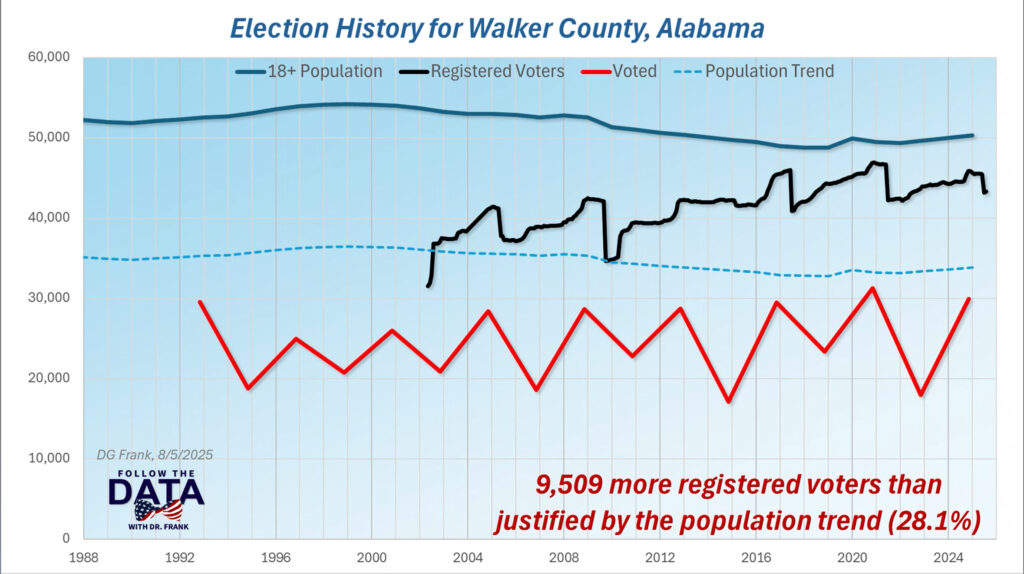
Dr. Douglas G. Frank’s analysis presented to the Walker County Commission compares the county’s voting-age population trend with registered-voter totals and calculates 9,509 registrations above the population trend, or 28.1 percent.
Hendon Questions Costs of Inflated Voter Rolls
Hendon then connected voter-roll maintenance to county spending.
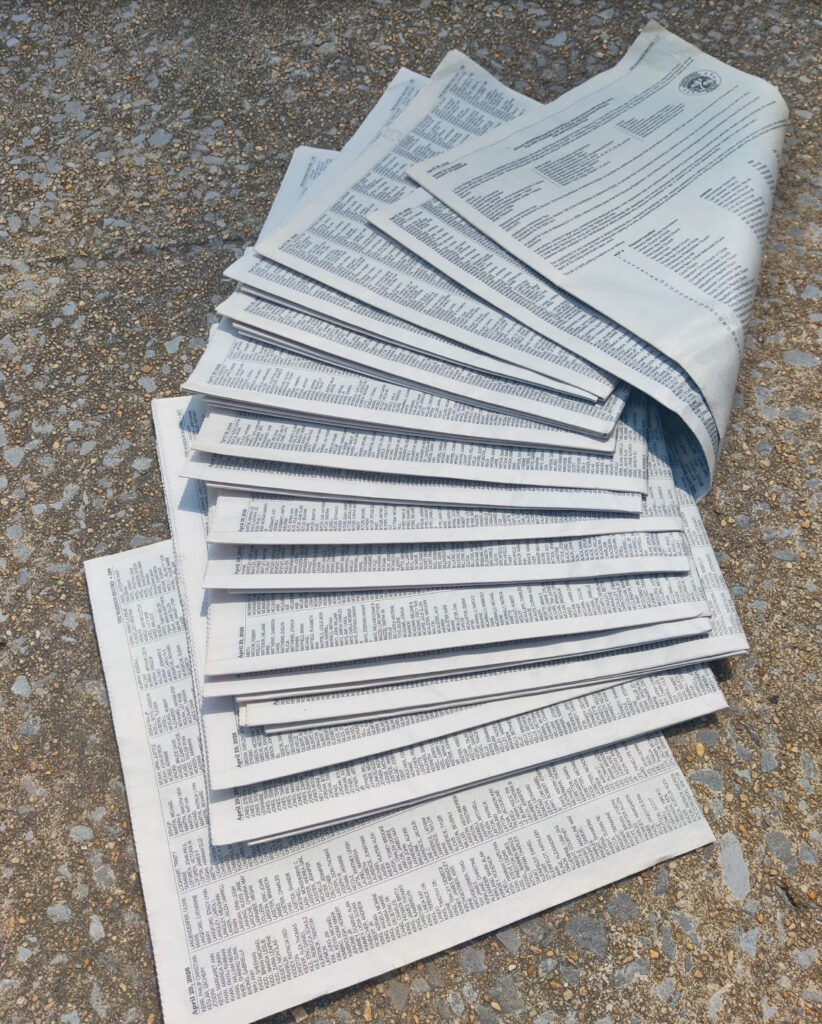
She pointed to costs associated with publishing voter lists, printing ballots and mailing voter-notification cards, arguing that inaccurate or inflated voter rolls can create unnecessary expenses for taxpayers.
As a visual example, commissioners were shown material illustrating 294 pages of voter information printed in Madison County.
“Is this sensible stewardship of taxpayer dollars?” Hendon asked.
Local Registrars and a Centralized System
The broader issue underlying Hendon’s presentation was control of voter-registration records.
She cited Alabama Code §17-3-6, which designates registrars as judicial officers in matters involving voter registration, and argued that the responsibilities assigned to those officials have become increasingly disconnected from their practical ability to control and maintain county voter rolls.
Hendon told commissioners that Alabama’s voter-registration system is centrally administered through a system involving Election Systems & Software, or ES&S, in Omaha, Nebraska, and argued that local registrars must work through that centralized system to perform voter-roll maintenance.
Her presentation also cited the National Voter Registration Act. Among the purposes Congress expressly identified in the NVRA are protecting “the integrity of the electoral process” and ensuring that “accurate and current voter registration rolls are maintained.”
The issue of local control is central to the election-integrity effort now organizing across Alabama. Frank has repeatedly advocated returning voter-roll management to Alabama counties, arguing that officials closest to their communities are better positioned to maintain accurate rolls and be held accountable for them.
Cybersecurity and Voter Data Also Raised
Hendon also raised concerns about cybersecurity, electronic poll books and the security of voter information.
The presentation included material concerning foreign acquisition of U.S. voter data as well as a May 2025 cyberattack affecting Alabama state government systems.
She told commissioners that vulnerabilities involving electronic check-in systems, provisional ballots and absentee-ballot procedures represented additional subjects the group intends to address at another public meeting.
Citizens Ask Commission for Work Session
Hendon concluded not merely by presenting the findings, but by asking the Walker County Commission to take a next step.
“We respectfully bring these findings to you and to the public,” she said, pointing to commissioners’ responsibility for county budgets and allocation of taxpayer funds.
She urged the commission to consider bringing independent election-integrity experts into a work session to discuss possible reforms and potential savings to Walker County.
“The bottom line is that we must take back control of our voter rolls from the centralized system, ES&S in Nebraska, and return it to Walker County as it used to be,” Hendon told commissioners.
Chairman Steve Miller thanked Hendon at the conclusion of the presentation. The transcript does not record further commission discussion or action on her request during this portion of the meeting.
The Walker County presentation reflects a larger county-by-county effort taking place in Alabama as part of Frank’s work with citizen teams across 48 states: citizens examining voter records, documenting findings and bringing that evidence directly to local officials.
For the Walker County team, the September 8 presentation put those findings into the public record. The next question is whether county officials will agree to the requested work session and examine what returning greater control of voter-roll maintenance to Walker County would require.