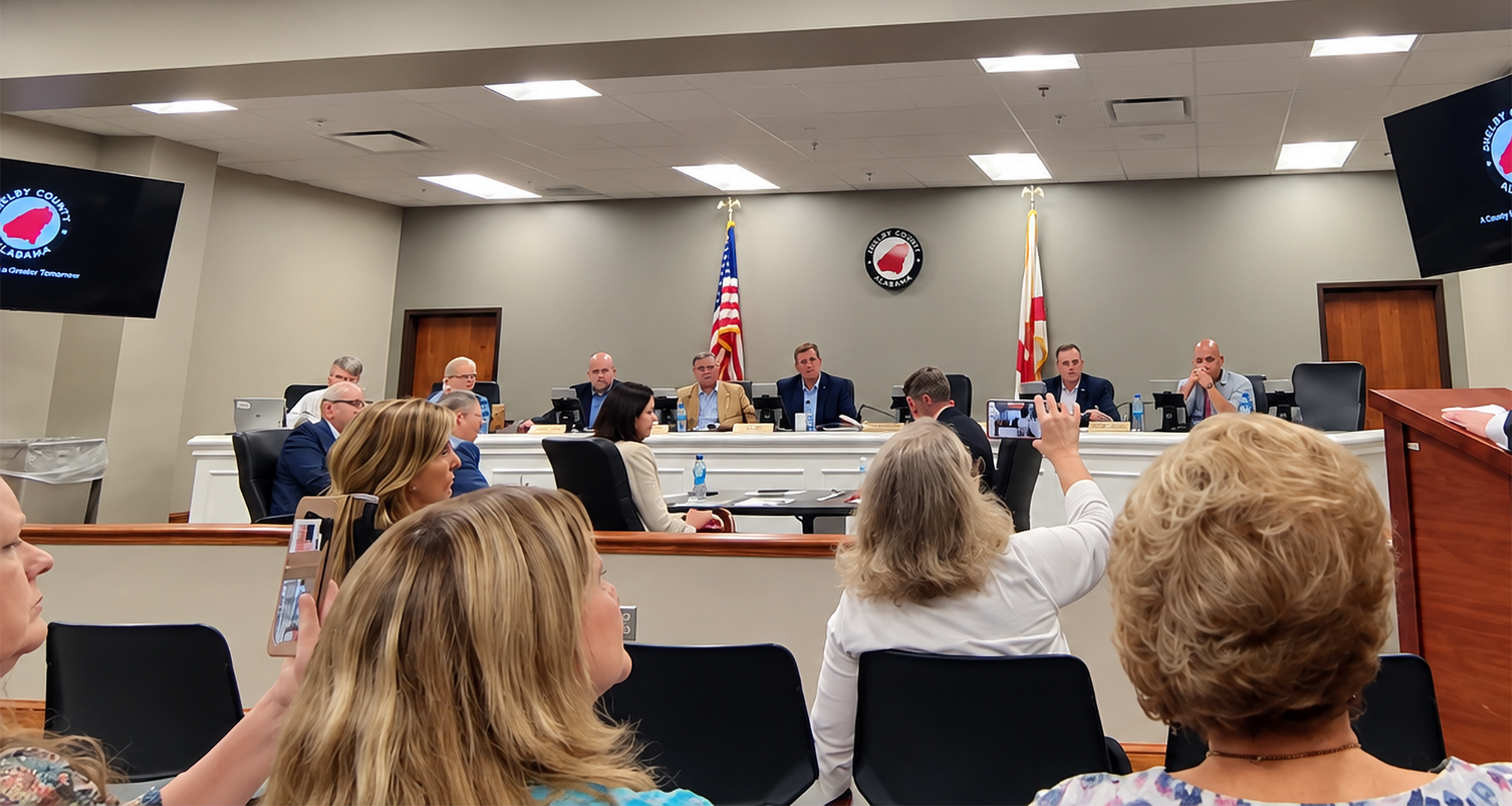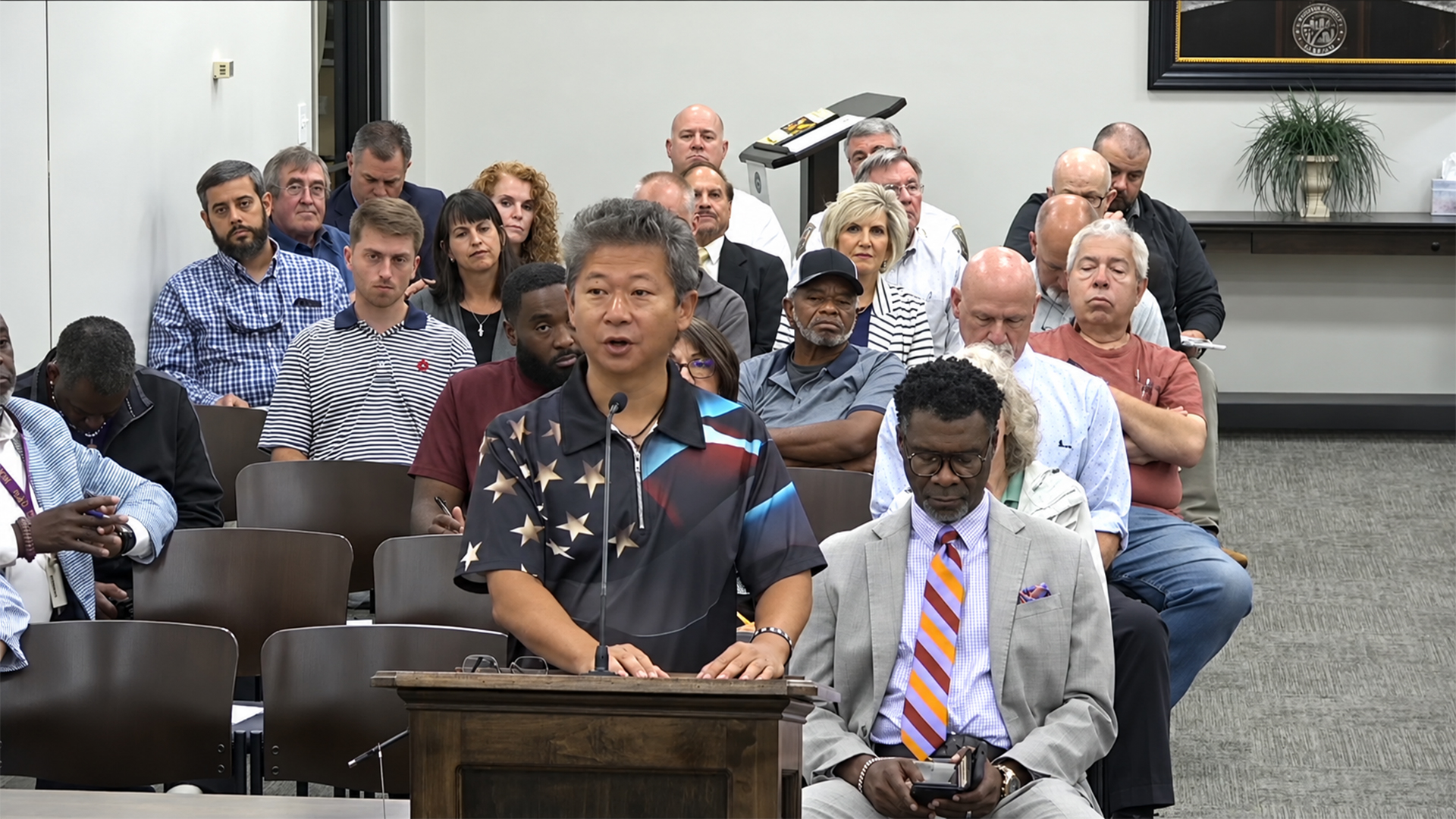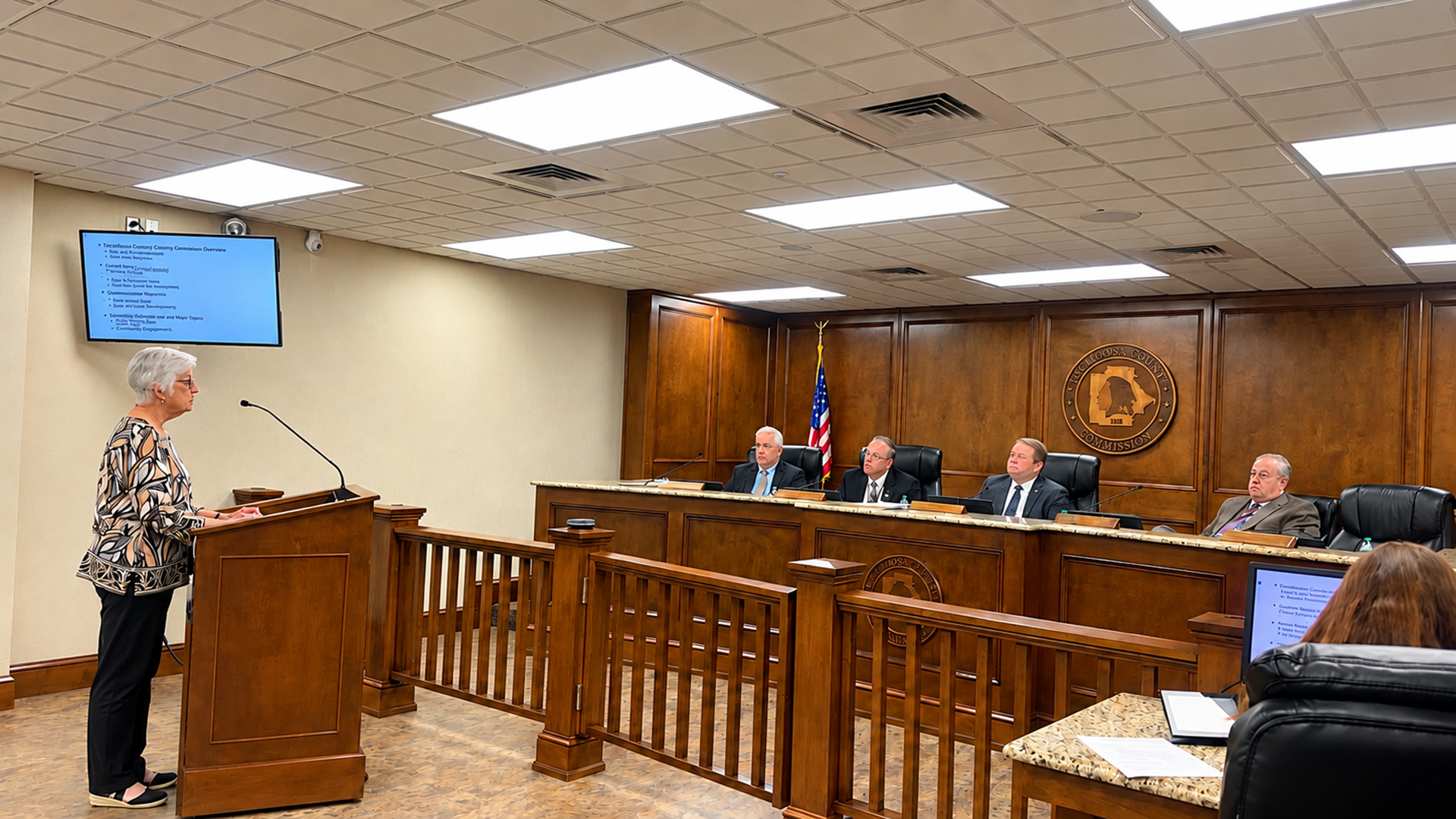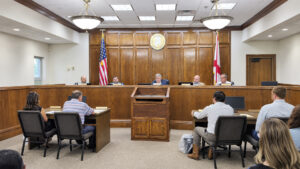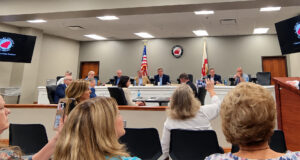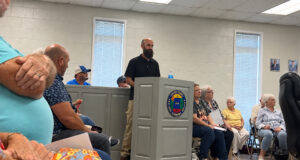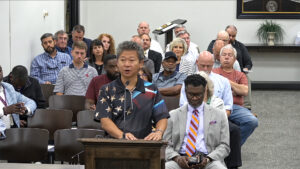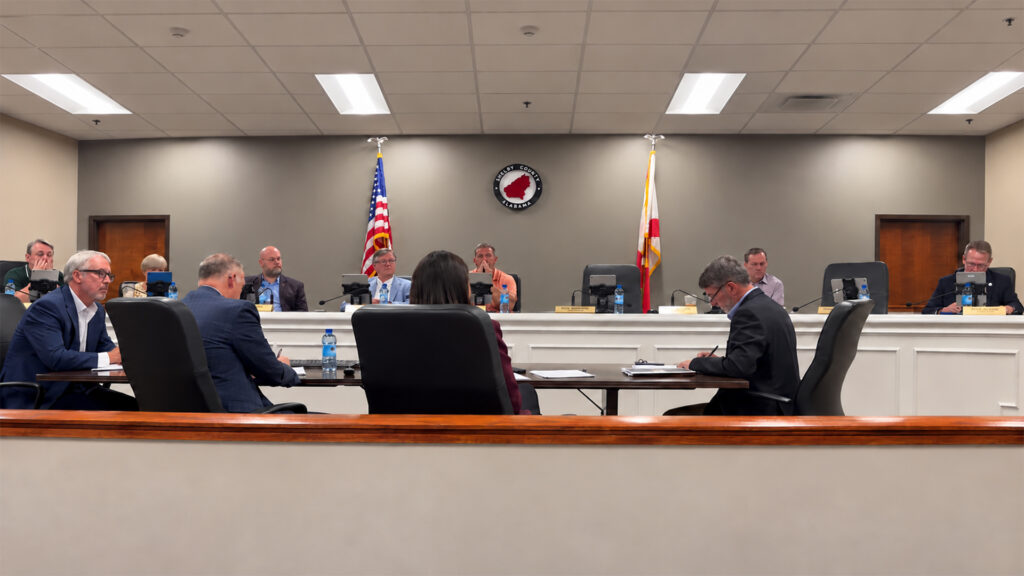
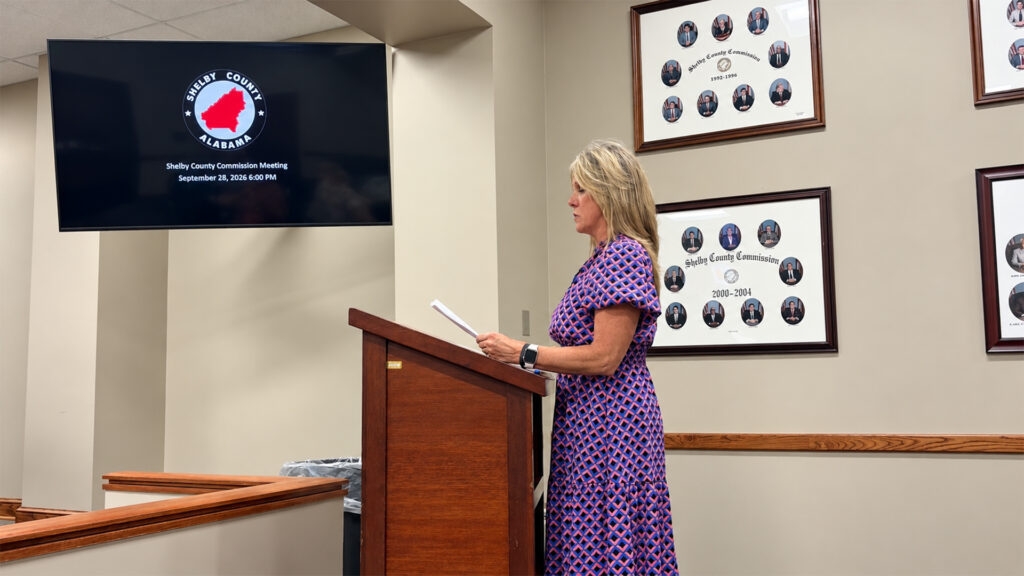
SHELBY COUNTY, Ala. — Shelby County’s citizen election-integrity team returned to the County Commission on September 28, 2026, for its second presentation, bringing additional voter-roll investigative findings, examining taxpayer costs and requesting a dedicated work session with county officials.
The presentation followed the team’s August 24 appearance, when citizens and Dr. Douglas G. Frank addressed deceased registrants, registrations associated with people who had moved, prolonged active status without voting activity, felony eligibility and limitations of the state voter-registration system.
Six citizens spoke at the September meeting: Dawn Ray, Joy Stritikus, Mike Rector, Pheadra Galloway, Kelly Jo Brand and Christine Carr. Their recurring request was for registrars to receive the information, training and tools needed to maintain accurate and current voter rolls, with greater local accountability for the records and expenses associated with them.
A Family’s Experience Seeking Removal
Dawn Ray opened with a personal example of the difficulty her family encountered after her daughter graduated from college, accepted employment and moved to Georgia.
Ray said former Alabama Secretary of State John Merrill had led her to understand that participating states in the Electronic Registration Information Center, or ERIC, would notify one another when a former resident obtained a driver’s license in another member state. Her daughter nevertheless discovered that she remained on Alabama’s voter roll.
Ray contacted Merrill, who referred her to Kim Melton in the probate judge’s office. Following Melton’s instructions, Ray and her daughter submitted a signed letter requesting removal. A month or two later, her daughter reported that the registration remained on the Alabama list.
A further round of calls finally produced the requested removal, Ray said.
“My point is, it shouldn’t take three times for a voter to be removed from the voter roll,” she told commissioners.
Ray said the experience helped motivate her involvement in the grassroots effort. She also described contacting Secretary of State Wes Allen to suggest public service announcements encouraging voters to check their registration information before the midterm election.
She asked commissioners to support giving registrars the tools needed to maintain accurate records under Alabama law and the National Voter Registration Act.
Registration Growth and Taxpayer Costs
Joy Stritikus connected the team’s voter-roll analysis to county expenditures.
Referring commissioners to a chart comparing registration totals, voting activity and population trends, Stritikus said the team’s analysis identified more than 35,000 registrations above the level supported by its population trend comparison. She described registration totals as approximately 30 percent above that trend.
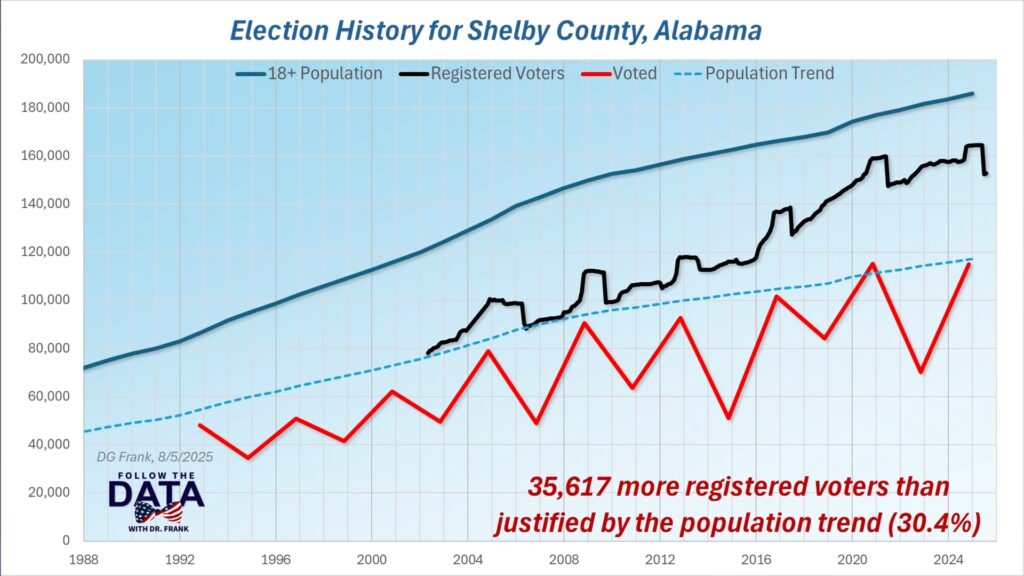
Stritikus said the county’s ES&S contract charged 82 cents per registered voter annually. Using approximately 181,000 registrations, she estimated an annual expense of about $150,000. She estimated that reducing the registration total by the number identified in the team’s analysis would reduce that expense to approximately $120,000.
“This shows that we would be saving about $30,000 of wasted taxpayer money,” she said.
Stritikus also identified ballot printing, storage and destruction of unused ballots, and publication of eligible-voter lists as expenses affected by the registration totals.
Her presentation urged county officials to examine both the accuracy of the voter rolls and the financial consequences of maintaining registrations that should receive further attention.
She requested support for greater local control of Shelby County’s voter records and for registrars to be responsible for maintenance and reporting with the tools necessary to perform that work.
Delays in Voter-List Maintenance
Mike Rector focused on the operation and transparency of Alabama’s AVID voter-list maintenance system.
He described its use of state agency information, National Change of Address data, agreements with other states and death-record information. His concern was the time between identifying a match and updating a registration, along with the difficulty citizens face determining when those steps occur.
Rector presented two deceased-registrant examples: one individual who died in September 2023 and another who died in October 2025. Both remained classified as active in the records discussed during the presentation.
He also reported that the team’s National Change of Address analysis identified 12,084 individuals who moved out of Shelby County during the period he described as March 2022 through March 2026. Of those, 7,169—approximately 59 percent—were listed as active as of March 31, 2026.
Rector then presented examples involving registrations in more than one state.
One involved an individual whose NCOA record showed a move to Henderson, Nevada, in August 2024. Rector reported that the Shelby County record reflected voting activity that November, without an absentee designation. The individual subsequently registered in Nevada in February 2025 and remained active on both states’ rolls, he said.
A second example involved an individual whose NCOA record showed a move to Bixby, Oklahoma, in November 2022. Rector reported voting activity in Shelby County that November, registration in Oklahoma in July 2023 and continued active status in both jurisdictions.
Rector argued that delays in processing registration changes increase costs and leave records vulnerable to misuse while they remain active. He requested more transparent processing and stronger support for local maintenance of the county’s voter rolls.
Active Registrations Without Voting Activity
Pheadra Galloway summarized the team’s broader findings and raised questions about accuracy, access to records and compliance.
She described the investigation as identifying noncitizen registrations, deceased registrants, people who had moved but remained registered locally, and registrations involving criminal convictions. She also focused on people carried as active despite having no voting activity across multiple elections.
Referring to another chart, Galloway said the number of active registrants without voting activity rose sharply between 2015 and 2016.
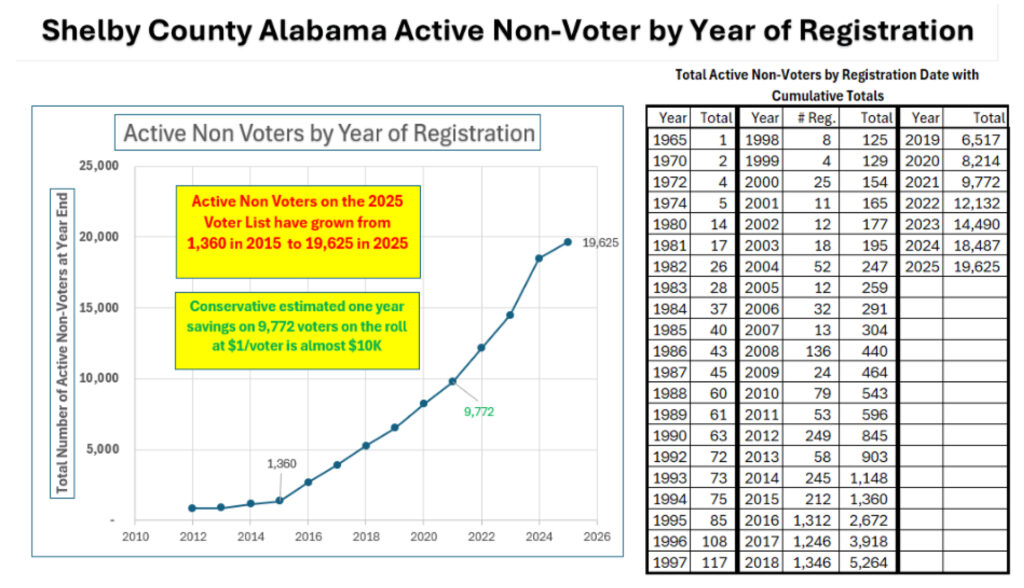
Galloway referred to 9,772 registrations in the analysis and estimated that appropriate maintenance of those records could have saved the county nearly $10,000 in 2025.
“That is not abstract,” she said. “It is money that my family and I earned.”
She asked where procedural gaps existed, whether applicable legal requirements were being met, and what financial and legal exposure failures could create for the county.
“We are citizens who want accurate, transparent, and auditable voter rolls,” Galloway told commissioners.
Criminal Convictions and Eligibility Records
Kelly Jo Brand presented examples drawn from the team’s review of 260 sex-offender registry records.
Brand told commissioners that the accompanying documents contained case numbers and described the examples as involving convictions that should have prevented registration or resulted in removal under applicable voter-eligibility requirements.
Her examples included a federal conviction involving transportation of a minor, an out-of-state conviction involving unlawful sexual activity with a minor, and convictions involving sexual abuse, sodomy and child pornography.
In several cases, Brand reported voting-history entries after the convictions. In others, she described registrations that remained on the rolls for decades without recorded voting activity.
Brand also identified a concern involving how an out-of-state conviction was represented in Alabama’s records. She argued that registrars need sufficient information to determine whether a conviction falls within Alabama’s voter-disqualification provisions.
“Does Alabama give our registrars the tools they need to identify these individuals and remove them from the rolls?” Brand asked. “Our findings say no.”
She requested training and better information for registrars, along with stronger local responsibility for maintaining and reporting voter records.
Request for a Dedicated Work Session
Christine Carr concluded by discussing the team’s concerns about federal election requirements and the relationship between local voter-list maintenance and Alabama’s centralized registration system.
Carr acknowledged progress by state and local officials. She said she had confirmed with the Secretary of State’s office and Shelby County’s Board of Registrars that the federal SAVE database was being used to assist with voter-roll review.
She argued that additional work remained and that the issues presented by the team extended beyond the categories addressed through that database.
Carr urged cooperation to improve registration accuracy, reduce election expenses and strengthen public confidence.
“We want to help Shelby County save money in our elections, and we want to increase even further the confidence that our citizens have in our voting process,” she said.
She then requested a work session where citizens and officials could examine the findings together rather than addressing them through separate, time-limited public comments.
“This will give us the opportunity to present slides and comprehensive evaluation of data and ideas,” Carr said.
The second Shelby County presentation continued the team’s effort to place its research before county officials and obtain practical support for registrars. Alongside individual registration examples, the September presentation emphasized the cost of maintaining inaccurate records and the need for a setting where officials and citizen researchers could examine the supporting documentation together.