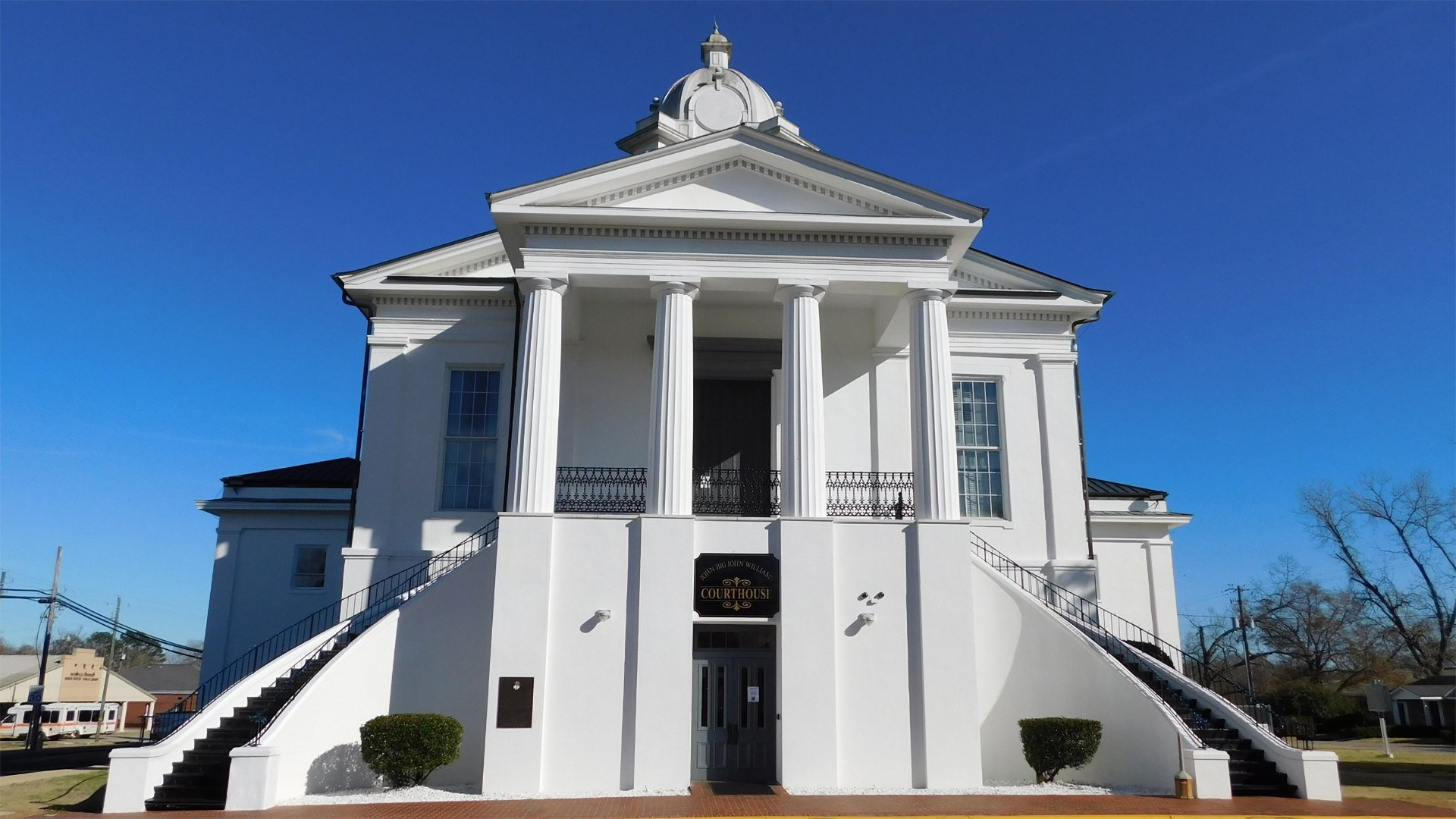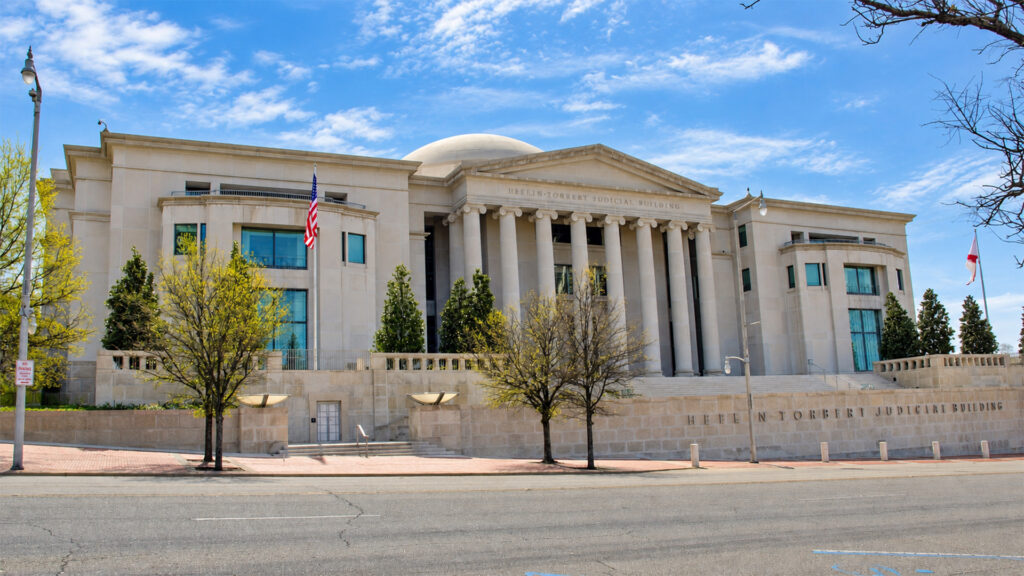
AI-edited illustration of the Heflin-Torbert Judicial Building; sky and lighting altered. Original photograph by Chris Pruitt, via Wikimedia Commons, CC BY-SA 3.0.
Randy Brock was sworn in as Conecuh County sheriff after a recount certified him the winner of the 2022 election by two votes.
Now the Alabama Supreme Court says those two votes should not have been counted for him. On September 4, the justices refused to reconsider their ruling. The certified victory is a tie, and the case has been sent back to the circuit court.
THE ENTIRE TWO-VOTE MARGIN DISAPPEARED
Certified result: Brock 2,228 · Blackmon 2,226
After the Supreme Court’s ruling: Brock 2,226 · Blackmon 2,226
The votes at the center of the case came from two ballots the voting machines rejected.
Neither voter filled in the oval beside Brock’s name. Neither filled in the oval for a straight-ticket Democratic vote. Instead, both marked over the Democratic Party emblem. During the recount, the county canvassing board examined the ballots by hand and counted them as votes for Brock. The circuit court agreed.
But there was a detail on the same ballots that changed the Supreme Court’s view: both voters had correctly filled in ovals when voting on constitutional amendments.
The justices concluded that the marks over the party emblem could not reliably establish an intention to vote Democratic. Without those two votes, Brock’s certified lead vanished.
The ballots were only part of the fight
Brock’s challenger, Republican Mike Blackmon, also contested three absentee ballots counted for Brock and argued that a vote for him had been lost during the recount. The absentee testimony raised another disturbing question.
One voter testified that she had not signed an absentee-ballot affidavit or personally cast the ballot counted in her name. Another said she had not applied for an absentee ballot and did not know one had been cast in her name.
How does an absentee ballot come to be counted in a voter’s name when that voter says she did not cast it?
In this case, the testimony did not persuade the trial court to exclude either ballot. The judge found the first voter’s testimony unpersuasive. For the second ballot, the voter’s brother testified that a relative helped them apply, but that she marked and signed her own ballot with assistance. The Supreme Court deferred to the trial court’s findings. It did not find that another person cast either vote.
Blackmon’s challenge to the third absentee ballot and his disputed recount claim also failed on appeal. It was the two ballots marked over the party emblem that changed the election result.
An election decided after most of the term had passed
Blackmon filed his contest after the November 2022 election. Brock took office in January 2023. The case did not reach trial until March 2025, and the Supreme Court did not reverse the result until June 12, 2026. Its refusal to rehear the case came on September 4, with the next sheriff election scheduled for November 3.
The delay prompted a sharp disagreement among the justices. In dissent from the rehearing decision, Justice Greg Shaw Sellers argued that reversing the trial court so close to the next election was futile. Justice Chris McCool answered that the court still had a duty to enforce election law—and that its decision would matter beyond this sheriff’s race.
The Supreme Court erased Brock’s two-vote victory on June 12. More than three months later, he remains sheriff—and Conecuh County still has no reported resolution of the tie. Alabama law provides for a county race tied at the top to be decided by lot. With another sheriff election approaching, the dispute over the last one remains unfinished.